The speed of technological change does not seem to slow down. From how businesses function to the way people interact with their surroundings technology is constantly changing everything in modern life. Some of these transformations have been in motion for years but are now at the point of critical mass, whereas others have come up quickly and caught entire industries off guard. It doesn't matter if you're working in technology or simply reside in a global society increasingly influenced by it knowing where the technology is in the future gives you a significant advantage. Here are the top 10 digital tech trends that are important in 2026/27 and beyond.
1. Artificial Intelligence moves from tool to TeammateAI has moved beyond being a novelty or a productivity shortcut to becoming something more integrated. the full details Over all sectors, AI systems are now active participants rather than passive assistants. In software development AI creates and reviews code with engineers. In healthcare, it identifies abnormalities in the diagnostic process that humans might not see. In content production, marketing, also legal assistance, AI will handle the first drafts and regular analysis so that human specialists can concentrate the higher-order aspects of their work. The transition is less about replacement and more about changing the way that humans do when repetitive tasks are managed automatically.
2. The Growth Of Agentic AI SystemsA step above standard AI assistants Agentic AI is a term used to describe machines that are capable of planning and carrying out multi-step actions autonomously. Rather than answering to a single message they break down complex goals, determine the appropriate path to take, utilize various tools and information sources, and move in the direction of a human without constant input. For businesses, this means AI that can handle workflows that conduct research, handle messages and update systems with minimal oversight. To everyday users, this refers to digital assistants which actually accomplish tasks rather than simply answering questions.
3. Quantum Computing Enters Practical TerritoryQuantum computing has spent years living in the realm of theoretical promise. But that is changing. Although quantum computers that are universal remain an ongoing project, specialised systems are beginning to show tangible advantages for drug discovery, materials science, logistics optimization and financial modeling. Large technology companies and national government agencies are increasing their investment in Quantum infrastructure and race to achieve meaningful commercial advantage is increasing. The businesses paying attention now are better off once the technology has matured.
4. Spatial Computing And Mixed Reality Expand Their FootprintIn the wake of the commercial launch of highly-seen mixed reality headsets, spatial computing is finding practical uses that go beyond entertainment and gaming. Architecture firms use it to provide immersive review of design. Doctors practice complex procedures using virtual environments. Remote teams work together in common three-dimensional environments. As the hardware gets lighter and cheaper, spatial computing is expected to be a common method for how digital information is processed as well as navigated and acted on both in professional and everyday contexts.
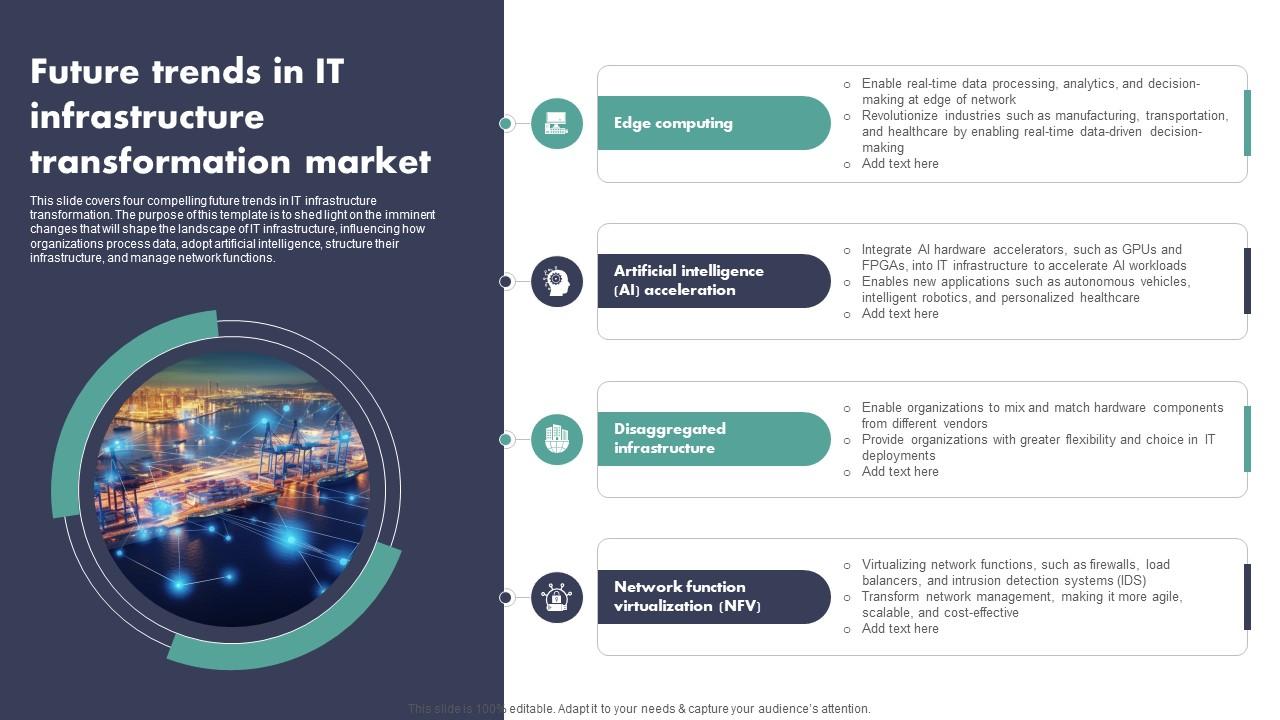
5. Edge Computing Brings Processing Closer To The SourceCloud computing has changed the way things are possible due to centralizing processing power. Edge computing is now decentralising it again and with great reason. The process of processing data is more near where it is generated, whether on the floor of a factory, an hospital ward, inside the vehicle's connected system edge computing can reduce the amount of latency, increases reliability, and decreases the bandwidth requirements of continuous cloud communications. For applications where instantaneous response cannot be negotiated, ranging from autonomous vehicles to industry automation through smart urban infrastructure, edge computing is increasingly important.
6. Cybersecurity develops into A Continuous DisciplineThe threat landscape is growing too quickly and too complex for the previous model of routine audits and patching reactively. In 2026/27, serious organisations adopt cybersecurity as a permanent and a broader organisational discipline, rather than an IT department's responsibility. Zero-trust architectures, where each system or user is secure as a default, is now being adopted as a norm. AI-driven tools monitor networks in real-time and detect anomalies prior to them becoming vulnerabilities. Humans remain the most abused vulnerability, making security culture and training just as critical as any technological solution.
7. Hyperautomation Connects The Dots Between SystemsHyperautomation makes use of AI Machine Learning, AI, and robotic process automation in order to discover the workflows that need to be automated rather than just isolated tasks. Instead of focusing on simple automation, it considers the connective tissue between systems that had previously required human-based coordination, and eliminates that friction completely. Industries such as banking and insurance all the way to supply chain operations and public services are finding that the use of hyperautomation goes beyond just decrease costs, but actually alters the way an organization is capable of doing at a fast pace.
8. Green Tech And Sustainable Digital InfrastructureThe environmental impact of digital infrastructure is getting ever-increasing scrutinization. Data centres consume enormous quantities of energy, and the increase in AI work in training has forced the amount of energy consumed to a significant level. In response, the sector is investing in more energy-efficient technology, renewable energy facilities, fluid cooling equipment, and smarter approaches to managing workloads. For companies that have ESG commitments the carbon footprint of the technology they use is not something that should be concealed in the background.
9. The Democratisation Of Software DevelopmentAI-powered platforms for low-code and zero-code let software creation be within everyone with a previous programming knowledge. Natural user interfaces and visual development environments make it possible for domain experts to build functional applications that automate complex processes and even integrate systems of data without being dependent on third party developers. The pool of specialists skilled at creating digital solutions is increasing rapidly and the consequences for agility in business and innovations are immense.
10. Digital Identity And Data Sovereignty Take Centre StageWith the increasing use of technology The questions of who has personal information and how identities can be copyright have become more prominent as nebulous concerns. Privacy-preserving identity frameworks that are decentralised, privacy-enhancing technology, and more robust rights to transfer data are increasing in popularity. In both the public and private sectors, they are being encouraged to adopt models that give users actual control over their online identities, and more transparent information about what their data will be used. It is a direction that has been decided, however, the route is disputed.
These trends are not singular developments. They feed off and speed up each other making a digital world which is growing faster than ever before in history. Information isn't just for technologists. In a world this thoroughly controlled by digital technology, it's increasingly pertinent to everybody. To find further detail, browse some of the top offentligdebatt.se/ to find out more.
 Top 10 Digital Social Developments Impacting Society In 2027
Social media is now an integral part of the fabric of our lives that distancing its influence from culture at a larger scale is becoming more difficult. It has a profound impact on how people form opinions, build identities to consume entertainment, monitor news, make connections, and are a part of public life. The social media platforms themselves continue to change quickly driven by competition, regulation, and the constant desire to attract and hold human attention. What's emerging in 2026/27 is a social media ecosystem that is more splintered, with more AI-saturated platforms, and is more influential than at any prior moment. Here are the top 10 social media trends that will shape culture going into 2026/27.
1. AI-Generated Content Inundates Every PlatformThe amount of AI-generated media across various social media sites has reached the point of changing the environment of information. Images, videos, writing posts, and complete accounts producing content created by artificial intelligence at high speed are now the norm on every major platform. There are a variety of implications from moderately benign AI-assisted creators creating more content and more effectively and causing more harm, to the truly destructive synthetic misinformation, invented personas, and fake consensus operating at levels that human moderates are not able to keep up with. The ability to distinguish humans-generated versus AI-generated information is being viewed as a technical challenge and a key cultural ability.
2. Short-Form Video Remains Dominant But EvolvesShort-form video was established as the most used format of content in this time, and the dominance continues into 2026/27. What can be changing is how sophisticated of both the content and those who consume it. Creators are working on more nuanced formats that are within the constraints of short-form and the public is showing an increasing demand for more substantive content that utilizes the format intelligently rather than simply optimising for the first three seconds of attention. The platforms themselves are testing with more formats and greater methods of engagement as they aim to get beyond the scroll and create the type of lasting time-on-platform, which ultimately leads to commercial value.
3. The Economy of the Creator Matures and The Creator Economy StratifiesThe market for creators has expanded into a significant sector of economics however, it's distribution of benefits has shifted to a more even distribution. Only a tiny percentage of creators in the top tier of the focus economy make considerable income, while a majority of the middle tiers struggle to convert audiences into sustainable revenue. Platform algorithmic changes, which increase the level of saturation of content, as well as the difficult task of standing out in an environment in which AI can reproduce content from the surface at no cost are all putting pressure on middle-tier creators. The most resilient creative businesses in 2026/27 have been those based on genuine community, an individual perspective, and direct monetisation strategies that minimize dependence on platforms' algorithms.
4. Alternative Platforms and Decentralised Platforms Gain GroundUnhappy with major centralised platforms, fueled through concerns over algorithmic manipulation security, data privacy, issues with moderation and the concentration on power within a smaller group of technology companies is driving growth on alternative social platforms and other decentralised ones. The federated social networks based around standards that are open, niche communities that cater to particular interest groups and subscriber-supported models that align incentive incentives to the user rather than the demands of advertisers are all gaining traction with audiences. The major platforms still enjoy huge benefits in terms of scale, but the ecosystem surrounding them is growing to be more diverse.
5. Social Commerce is now a primary shopping ChannelThe integration of online commerce directly into social media feeds such as live streams, feeds, and creator content has led to changes in how people shop that is particularly pronounced among younger age groups. Social commerce, which allows for discovering and purchasing goods without leaving a website, is growing rapidly across every major social channel. Live shopping formats, pioneered in Asia that are now gaining traction across the world, combine entertainment and retail in ways that produce strong results in conversion and high levels of engagement. For brands, the influencer-influencer relationship has evolved from awareness marketing into direct sales channels with specific revenue attribution.
6. Raw Content And Authenticity Refuse to PolishA counterresponse to decades filled with highly-produced, aspirationally edited social media content is creating a strong desire for rawness in its spontaneity, authenticity, and imperfections. Creators who share unedited moments which express genuine uncertainty and present lives that look at a human level rather than being aspirationally impossible are attracting audiences who polished content are struggling to achieve. This is not a complete disdain for quality but rather a recalibration of what quality signifies in a culture where authenticity is itself becoming a form of competitive advantage. The irony of how authenticity that is raw can be made as meticulously designed as any other format of content isn't lost on the most self-aware corners of internet.
7. Mental Health And Platform Design Confront More ScrutinyThe link between social media use and the mental state, especially with regard to young people is still a source of intense research, regulatory attention, and public debate. Age verification standards, screen time devices as well as algorithmic transparency obligations and limitations on certain content recommendations are all under consideration or implementation in a range of major jurisdictions. Platform design choices that exploit psychological vulnerabilities to enhance engagement are facing scrutiny that is causing genuine change in the manner that products are built and governed. The gap between the information platforms share about the consequences of their design decisions and what they share publicly remains a key point of debate.
8. Community and interest-based spaces grow in importanceThe broad public Square model in social media in which all users post to every person about every topic, has exposed its shortcomings in terms of toxicity, polarisation, and noise, smaller and more focused communities are growing in appeal. There are subreddits and Discord servers Substack communities and private group chats as well as niche forums organized around specific areas of interest or identity are where numerous people are finding online connection and interaction they no longer expect from general-purpose platforms. The change is in line with a broad realization that the scale that creates platforms is also what creates a difficult environment for communities to flourish.
9. Political And News Content Faces Platform RetreatMany major social networks have taken deliberate actions to minimize the significance of news and political contents in algorithmic suggestions, citing the toxicity and moderation burden it generates relative to the user experience. This has implications for political debate the media, journalism and political communication are profound and hotly debated. For news organisations that built distribution strategies around connections to social platforms, this recrudescence poses a serious threat. For those who are used to making use of social media platforms as direct communications channels, this is prompting a reconsideration of their digital strategy. The question of the role social platforms should play in the democratic information ecosystems is in limbo.
10. Digital Identity and Reputation Online Become Long-Term AssetsThe growth of an online presence over time has become something that users take on with greater deliberateness. Digital identity, which is the amount of content that someone has written, shared or created and acted upon across various platforms, has real-world consequences for careers, relationships and possibilities that were not properly understood in the early days of social media. The managing of online reputation such as what content to share as well as what to curate, what to remove, and how to create a consistent as well as credible digital presence with time, is becoming an everyday skill, rather than just a concern for public figures or professionals in media-related roles. It is a fact that the permanence and searchability online content mean that decisions made casually in one context can resurface in another with ramifications that are hard to predict.
The world of social media in 2026/27 is far more powerful, contested, and more consequential than at any previous point in its brief history. These trends indicate an evolving landscape where the rules of engagement are being renegotiated by regulators, platforms, creators, and consumers simultaneously. Being able to navigate it effectively, whether as either a person, a company or as a society requires more analytical savvy in comparison to what the initial utopian conceptions of social media that would be necessary. To find more information, visit the top fabrikstorget.se/ and find expert analysis.